
When Software Meets Hardware
Discovering New Sensible Defaults
When software meets hardware, engineering principles remain largely the same, but the sensible defaults often change. This article describes our experience modernizing a large IoT fleet of battery-powered sensors, where familiar software practices met physical constraints, intermittent connectivity, and large-scale deployment. We treated hardware as part of the development environment, built experimentation capabilities, designed devices to explain themselves, treated energy and disconnection as software concerns, and designed deployment together with recovery. The principles of fast feedback, automation, testing, observability, safe deployment, and continuous learning remained important; what changed was how we applied them. These practices emerged through experiments, failures, and operational experience—each challenge helping us replace a reasonable assumption with a more sensible default.
15 October 2026

Kuldeep is an engineering leader based in India, passionate about discovering and shaping engineering practices and standards across technology domains. He has established communities and Centers of Excellence in IoT, AR/VR, the Metaverse, Web3, and, more recently, AI.
He is the author of Exploring the Metaverse and Jagjeevan, has contributed to international standards through ITU-T and IEEE, and collaborates with academia across India. He also holds several patents in emerging technology.
Contents
- Learn by building an experimentation environment
- Consider the physical world part of the development lifecycle
- Every device must be able to explain itself
- Design interfaces for engineers as deliberately as interfaces for users.
- Simulate what is expensive to reproduce physically
- Design for disconnection, not just connection.
- Treat energy consumption as a software design concern.
- Design deployment and recovery together.
- Optimize the engineering process for confidence at scale.
- Design observability for the fleet, not just the device.
- The engineering environment became part of the system
- Use AI to shorten the learning loop, not just the coding loop.
- Capture discoveries, not just decisions.
- The principles stayed, the defaults changed
- Why call them sensible defaults?
Modern software engineering gives us a set of practices that we tend to carry from one project to another: AI assisted development, automated testing, CI/CD, observability, automation, simulation, and safe deployment. They work well enough that we sometimes forget to question the assumptions behind them.
I had to question some of those assumptions when our team started modernizing a large retail IoT system. The system had around 800,000 battery-powered sensors deployed across 3000 stores. The existing connectivity technology was reaching the end of its life, and we needed to move to a newer technology without replacing the installed devices, and also onboard newer stores with next gen devices.
Our team knew software engineering well. We had experience with web applications, cloud platforms, mobile applications, IoT and other distributed systems. What we did not have was deep experience in embedded firmware and large-scale device networks. We thought the software engineering skills would apply here too, and it did, the engineering principles remain the same, but the default practices changed.
Let us find how we discover this change.
Learn by building an experimentation environment
After initial spikes on firmware development technology, our challenge was no more writing the firmware, but actually to understand the IOT system that has been running for years, as the organizational changes had left gaps in the knowledge of the existing firmware, hardware and network architecture.
Documentation helped, but it wasn't enough. Things weren't documented, and some documents described hardware or behaviour we couldn't reproduce. Some answers could only be found by putting our hands on the actual devices, and playing with limited access to production systems.
So we started building things and measuring what actually happened. We built an IoT lab with physical sensors, wire harnesses and learning kits. We created environments where we could experiment with radio behaviour, reused sensors with dead batteries for testing, and measured power consumption and network behaviour.
All these initially looked like our preparation, trials but quickly all this started becoming our engineering work, and soon we were not waiting to understand the system. The IOT lab became part of how we learned, and reverse engineered.
For embedded systems, sometimes the fastest way to answer a question is not to read another document, but to connect the device and see what happens.
Consider the physical world part of the development lifecycle
In conventional software, the development environment is usually made up of software tools. A developer can clone a repository, install dependencies and run the application irrespective of physical location, working from anywhere.
The equivalent setup for our project needed something else. It needed physical devices. We end up creating what we called a sensor farm: a controlled collection of real devices connected to the new network, with monitoring around them. This enabled our engineers to work with multiple devices and observe what happened when they communicated, slept, woke up or lost connectivity. Physical placement, radio conditions and power, all became part of development and testing.
We didn't need every developer to have a laboratory on their desk, but we did need the development process to provide access to the physical behaviour of the system and get fast feedback, the engineering practices like TDD, Automation, XP were all applicable but with hardware in loop.
Every device must be able to explain itself
Once we had a working device, well integrated as part of the development environment, another question appeared: “What happens when the device is somewhere we cannot reach?” This sounds like an operational question, but it turned out to be an architectural one.
Imagine an engineer receives a report that a sensor isn't behaving correctly. The sensor is sitting in a store or development environment, and the engineer is somewhere else. In this case there is no debugger attached, there may be no one available to open the device, the device may be asleep, and the network may not even be available.
A conventional application can often tell us what happened through logs and traces, but a physical device doesn't automatically have that capability. We therefore started building diagnostics into the device firmware itself, where we wanted to know things like which firmware was running, whether the device was healthy, when it last communicated, what its network state was, what happened before a failure, whether it was sleeping, whether it was repeatedly reconnecting, and what its firmware upgrade status was.
We added health checks and diagnostic information, ways to access that information locally, and APIs so that the same information could be retrieved remotely. We then started feeding the information into dashboards and operational tooling.
This changed the way we thought about observability. We weren't simply adding logging to an application. We were designing a system that could operate devices we could not physically see, where each device needed to explain itself. For a small number of devices, this is useful. For hundreds of thousands, it becomes essential.
Design interfaces for engineers as deliberately as interfaces for users.
Diagnostics solved only part of the problem. Engineers also needed ways to interact with the device without physically opening it.
We needed local interfaces such as NFC and BLE, as well as remote interfaces through the gateway and platform. These allowed engineers to inspect configuration, retrieve diagnostics, understand device state and perform operations remotely.
This made us think differently about engineering interfaces. We normally spend a lot of time designing interfaces for users, while interfaces for engineers and operators can become an afterthought.
For a large device fleet, they are part of the system.
Simulate what is expensive to reproduce physically
The next surprise came when we increased the number of devices, and reached the real store.
Everything was fine, until we onboarded a handful of devices, onboarded smaller stores, but as we moved to larger stores, the network infrastructure had limits we had not encountered during smaller lab experiments. At one point, we discovered that the new network hardware could support only a limited number of devices—far below the scale required by some larger stores.
Testing a few devices is very different from testing thousands. Network behavior, infrastructure limits, message rates, device physical location constraints and device disconnection problems started appearing at scales that were difficult to reproduce physically.
So we built a virtual device emulator: special firmware for the same device that could simulate hundreds of unique devices, each can be configured behave differently under different network and environmental conditions. Running many of these virtual devices together allowed us to simulate a large store environment and test the parts of the system where scale itself was the problem. This did not replace physical testing. We still needed real devices to validate firmware, hardware and radio behavior.
We also built a virtual store that behaved like a real store, with a gateway publishing simulated sensor readings to the platform. This allowed us to exercise the downstream systems at store scale without needing hundreds of physical devices for every test.
Design for disconnection, not just connection.
Enterprise applications often make a comfortable assumption: the network is available, and it is considered an infrastructure concern, and applications need to make sure it handles disconnection with a good user-friendly way, letting application reconnect immediately.
A battery-powered device has a different relationship with the network.
The device may sleep on idle to save battery, It may temporarily lose connectivity. It may reconnect repeatedly. It may not be reachable at the exact moment the platform wants to communicate with it. Remember that a connection attempt is the heaviest operation for the device.
We therefore had to carefully design for intermittent connectivity rather than treating it as an exceptional failure. This affected firmware, gateway communication, commands, telemetry and device management. Once we accepted that the device would sometimes be unavailable, many design decisions became clearer.
Treat energy consumption as a software design concern.
There was another constraint that was easy to underestimate: the device had a limited amount of energy, but it is supposed to be operational for years.
In a server application, an inefficient operation might consume more CPU, memory or increase cloud cost. In a battery-powered sensor, unnecessary computation or communication can reduce the useful life of the device.
We introduced power measurement and profiling into our development process. We looked at when the device was awake, how often it communicated and what different operations meant for battery consumption.
The important thing wasn't simply optimizing the code. It was understanding that every design decision could have a physical consequence—even something as small as a log statement or a few lines of code that appeared to be unused.
We also had to rethink some of our usual assumptions about memory management. Instead of aggressively cleaning up allocated memory after every operation, in some cases we chose a simpler approach: let the device run for 24 hours and then reboot it as part of its normal operating cycle.
On a device, sometimes the simplest software solution is not the one we would choose in a server.
Design deployment and recovery together.
Firmware deployment introduced another challenge.
A cloud application can often be rolled back quickly when something goes wrong. Physical devices distributed across thousands of stores does not give us that luxury.
The battery consumed in downloading and installing firmware can not be rolled back. The device might be offline during an update. The network might fail halfway through a download. The firmware might not validate correctly. Or a problem might only become visible after deployment. All this would change the meaning of deployment and recovery.
We therefore designed firmware updates with recovery as part of the deployment mechanism. We implemented over the air firmware updates using secure downloads, validation and partition swapping. Updates could be applied to individual devices, groups of devices or stores, with progress visible through the gateway and, where useful, locally through NFC. The device also stored its firmware upgrade state, allowing an update to resume from where it left off after recovering from an interruption or failure.
More importantly, we designed a staged rollout, as we wanted to know what happened after an update before updating everything. After all, the question was no longer just, “How do we deploy the new firmware?” but, “How do we deploy it safely, and what happens when it goes wrong?”
Optimize the engineering process for confidence at scale.
By this point, something subtle had changed.
Early in the project, we talked like software engineers. How quickly can we build this? How quickly can we deploy it? How automated can we make the pipeline?
Those questions still mattered. But increasingly, our conversations became different. Can we trust this firmware update? Can we recover if something goes wrong? Can we explain why this device failed? Can we understand what is happening across a store? Can we safely update thousands of devices? What will this do to battery life? And how long will it take to upgrade a store?
We were optimizing for something slightly different: confidence. That didn't mean giving up speed. It meant recognizing that speed without confidence isn't necessarily progress. For a physical fleet, a fast deployment that creates thousands of unhealthy devices is a very efficient way to create a large problem.Design observability for the fleet, not just the device.
Making an individual device explain itself was necessary, but it was not sufficient. With hundreds of thousands of devices, nobody can inspect them one by one. The question changed from “What is this device doing?” to “What is happening across the fleet?”
We built dashboards and analytics to identify communication failures, unusual behavior, outages, firmware distribution, patterns and other fleet-level conditions. Operational teams needed alerts and tools that could show whether a problem was isolated or affecting a much larger part of the fleet.
The engineering environment became part of the system
By this point, several things that had started as engineering or operational tools had become essential parts of the overall system.
The physical sensor farm helped us learn and test. The virtual device emulator helped us test at scale. Diagnostic interfaces allowed engineers to understand devices remotely. The gateway provided communication and management capabilities. Dashboards and analytics allowed operations teams to understand the fleet.
The architecture started looking something like this:
Device → Firmware, Diagnostics and Configuration → IoT Gateway → Telemetry, Commands and OTA → Fleet Platform → Analytics, Alerts and Operations
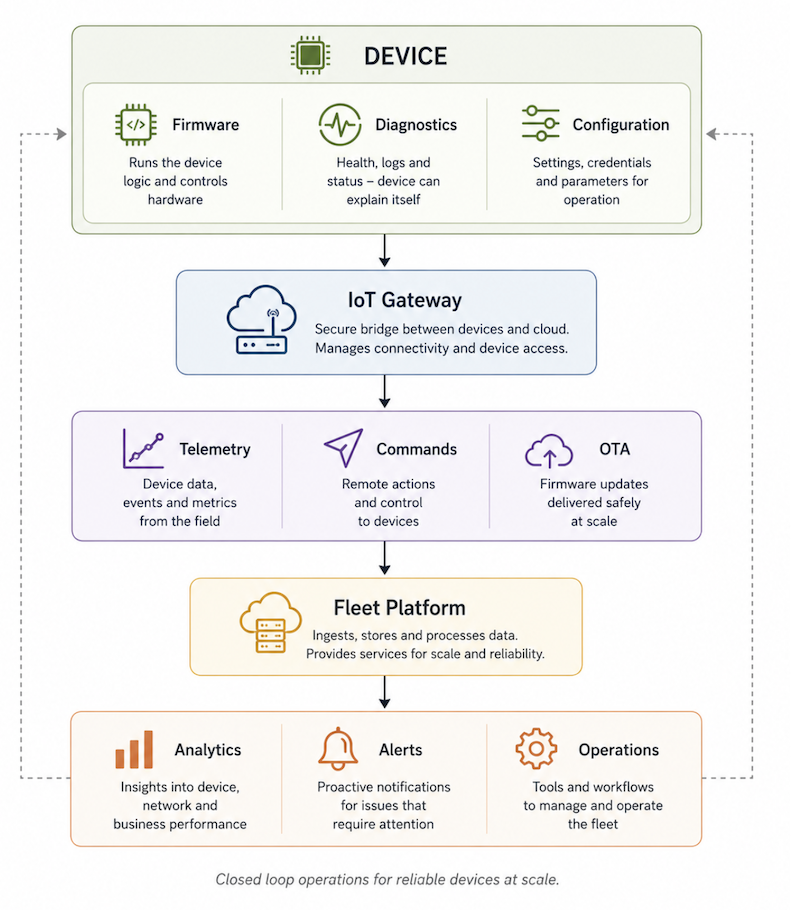
Figure 1: An engineering environment: Hardware, Software, and Feedback
These were not simply developer conveniences. Together they allowed us to build, test, operate, migrate and manage a very large physical fleet. The more devices we had, the more valuable this surrounding platform became.
Use AI to shorten the learning loop, not just the coding loop.
AI also became part of how we worked, although not in the way we initially expected.
We used LLMs to explore unfamiliar areas, prototype solutions and shorten the time between a question and a useful experiment. We also used AI-assisted development to build dashboards, migration trackers, outage detection and other engineering tools more quickly.
The important benefit was not simply generating code. It was reducing the cost of trying something.
Capture discoveries, not just decisions.
We were learning through experiments, failures, measurements and operational incidents. If we did not capture those discoveries, the next person would have to learn the same lesson again.
Documentation therefore became more than recording architecture decisions. We captured what we had learned about devices, networks, testing, diagnostics, deployment and operations, and shared that learning through technical articles, training and our engineering community.
Traditional documentation often tells us what the system is. In an unfamiliar domain, it is equally valuable to capture how we discovered why it is that way.
The principles stayed, the defaults changed
Looking back, I don't think we invented a new methodology for IoT or embedded software.
We still wanted fast feedback, automation, good testing, observability, maintainability, safe deployment and continuous learning. What changed was how those principles were practiced.
Over time, the changes looked like a new set of defaults.
| We started with this assumption | We ended up with this sensible default |
|---|---|
| Documentation should tell us enough | Learn by building an experimentation environment |
| Hardware can be tested later | Consider the physical world part of the development lifecycle |
| A device performs its function, and platform can always explain its health | Every device must be able to explain itself |
| Interfaces are primarily for users | Design interfaces for engineers as deliberately as interfaces for users |
| Network behavior, physical environment can be tested and reproduced with a few devices in lab | Simulate what is expensive to reproduce physically |
| Devices should normally be reachable | Design for disconnection, not just connection |
| Battery is mainly a hardware concern | Treat energy consumption as a software design concern |
| Deployment means installing firmware | Design deployment and recovery together |
| Optimize primarily for delivery speed | Optimize the engineering process for confidence at scale |
| Observability means logs and metrics | Design observability for the fleet, not just the device |
| Build the product, then supporting tools | The engineering environment became part of the system |
| AI helps write code | Use AI to shorten the learning loop, not just the coding loop |
| Discovery happens before development and capture decisions in the final design | Capture discoveries, not just decisions |
The table is a record of what happened. Each default was earned by encountering a problem.
Why call them sensible defaults?
I use the term sensible defaults deliberately.
None of these practices was invented from first principles. Most emerged from problems we encountered. We started with an assumption that seemed reasonable, ran into something that challenged it, experimented, and gradually changed the way we worked.
That is how engineering practices often evolve in real projects. The environment tells you where your assumptions are wrong. If you pay attention, those failures can help you discover a better default.
That was certainly our experience. When software meets hardware, the engineering principles do not necessarily change. But the sensible defaults might.
Acknowledgments
Thanks to Martin Fowler for encouraging me to write about this topic, building on a draft originally submitted for Thoughtworks’ Most Innovative Project of 2025, where the project became a finalist. Martin helped me shape the narrative around the idea of discovering sensible defaults. I also want to acknowledge the team members whose experiences, ideas, and contributions helped shape both the narrative and the sensible defaults we discovered along the way.
I used AI as a friendly writing assistant throughout the process. I used it to review and refine the draft, correct grammar and formatting, generate images, and help align the article’s style with the standards and tone of martinfowler.com. I also asked the AI assistant to research a few existing Martin Fowler articles to better understand their structure, style, and presentation. The ideas, experiences, and technical content in the article are my own; AI was used primarily as an editing, research, and creative support tool.
Significant Revisions
15 October 2026: published