
Structured-Prompt-Driven Development (SPDD)
How to make LLM-assisted changes governable, reviewable, and reusable
LLM programming assistants have demonstrated considerable value, but mostly with individual developers. The internal IT organization in Thoughtworks has been using them for their teams and have developed a method and workflow called Structured Prompt-Driven Development (SPDD). The article describes a simple example of this workflow with details in github. This workflow treats the prompts as a first-class artifact, kept with the code in version control, and used to align development with business needs. We have found that developers need three key skills to be effective: alignment, abstraction-first, and iterative review.
28 April 2026

Wei Zhang is an AI-assisted delivery expert at Thoughtworks. With nearly a decade of experience in software delivery, including three years focused on architecture, he designs engineering practices for AI-augmented software delivery — evolving the methods that help teams harness AI with both speed and discipline.

Jessie Xia is Global CIO at Thoughtworks, where she has built a 20-year career across software delivery, business leadership, and enterprise technology transformation. She previously served as Managing Director for Southeast Asia with P&L responsibility, and earlier spent five years in software delivery. She now focuses on advancing AI-first software delivery at Thoughtworks Global IT Services, while also sharing practical perspectives with clients on how to apply AI in ways that are governed, scalable, and reliable.
Once a team adopts AI coding assistants, the first gains show up at the individual level: one developer can draft, modify, and refactor code much faster than before. But delivery speed is rarely limited by typing. When you look at the full delivery lifecycle, from requirements through release, new friction appears:
- Ambiguous requirements become code quickly, and misunderstandings scale with them.
- Reviews have to process more change, and inconsistency becomes easier to introduce.
- More integration and testing issues surface because “generated” doesn't mean “aligned.”
- Production risk is harder to reason about when the volume of change rises.
So yes, local speed improves. But that doesn't automatically translate into system-level throughput. It's like buying a Ferrari and driving it on muddy roads: the engine is powerful, but your arrival time is determined by road conditions and traffic. In our experience, the real question isn't “How do we generate more code?” It's how do we make AI-generated changes governable, reviewable, and reusable, so teams get faster and safer?
That led our Thoughtworks internal IT teams (Global IT Services) to a method and workflow we now call Structured Prompt-Driven Development (SPDD). SPDD aims to turn AI assistance from personal efficiency into an organization-level capability that scales, without trading away quality.

Prompts as First-Class Delivery Artifacts
What is SPDD?
Structured Prompt-Driven Development (SPDD) is an engineering method that treats prompts as first-class delivery artifacts.
Instead of relying on ad hoc chats, SPDD turns prompts into assets that can be: version controlled, reviewed, reused, and improved over time. Teams use structured prompts to capture requirements, domain language, design intent, constraints, and a task breakdown. Then the LLM generates code within a defined boundary, so output becomes more predictable and easier to validate.
It has two core components
The REASONS Canvas
The REASONS Canvas is a structure for generating prompts. It forces clarity around requirements, domain model, solution approach, system structure, task decomposition, reusable norms, and safeguards. So the LLM is guided by intent, not guesswork.
The REASONS Canvas is a seven-part structure that guides a prompt from intent → design → execution → governance.

Abstract parts (intent & design)
- R — Requirements: What problem are we solving, and what is DoD?
- E — Entities: Domain entities and relationships.
- A — Approach: The strategy of how we'll meet the requirements.
- S — Structure: Where the change fits in the system; components and dependencies.
Specific parts (execution)
- O — Operations: Break the abstract strategy into concrete, testable implementation steps.
Common standards parts (governance)
- N — Norms: Cross-cutting engineering norms (naming, observability, defensive coding, etc.).
- S — Safeguards: Non-negotiable boundaries (invariants, performance limits, security rules, etc.).
The canvas aligns intent and boundaries before code is generated, moving uncertainty to the left. Because the structured prompt captures the full specification, reviewers reason about a single artifact instead of scattered chat logs and partial diffs. By following the same structure, every prompt becomes governable in the same way. And as domain knowledge and design decisions accumulate in each prompt, they compound individual expertise across iterations and reduce variability across the team.
The SPDD workflow
The workflow brings prompts into the same discipline as code: commit history, review, and quality gates. It also enforces a simple but powerful rule:
When reality diverges, fix the prompt first — then update the code.
Over time, this changes how teams work. Reviews move away from “spot the bug” toward “check the intent.” Rework becomes more controlled. And successful patterns naturally accumulate into a reusable prompt library that supports AI-First Software Delivery (AIFSD).
If you've known about Spec-Driven Development, you'll recognize the same starting point: write the spec clearly first, then let the model implement. SPDD takes a different angle. It treats structured prompts as governed, reusable, versioned team assets (REASONS + workflow) that evolve alongside the code - an approach that Birgitta Böckeler categorizes as a spec-anchored approach.
The goal of the SPDD workflow is to turn business input → abstraction → execution → validation → release into a “closed loop”1—and to make sure prompt assets and code evolve together, not separately.
1: In a one-way pipeline, requirements produce code and the process ends; any later adjustment happens in code alone and the original intent drifts out of date. In SPDD the loop closes on two scales. Within an iteration, feedback flows back: logic corrections update the prompt before the code; refactoring syncs from code back to the prompt — so neither side silently diverges. Across iterations, the accumulated prompt assets — domain models, design decisions, norms, etc. — become the starting context for the next enhancement, so each cycle builds on a governed baseline rather than starting from scratch.

SPDD workflow
The aim of this workflow is to anchor collaboration on the prompts, so that developers and product owners can avoid repeated cycles of alignment. The prompt sets an explicit boundary for code generation, reducing the randomness of the LLM's non-determinism, making it easier to govern. By treating the structured prompts as first-class artifacts in version control, we turn successful practices into reusable assets, improving consistency and reducing reinvention.
In practice these steps are carried out through commands provided by openspdd, a command-line tool that implements the SPDD workflow. The table below summarizes each command.
| Command | Type | Purpose |
|---|---|---|
| /spdd-story | Optional | Breaks a large requirement into independent, deliverable user stories following the INVEST principle. |
| /spdd-analysis | Core | Extracts domain keywords from requirements, scans relevant code, and produces a strategic analysis covering domain concepts, risks, and design direction. |
| /spdd-reasons-canvas | Core | Generates the full REASONS Canvas — an executable blueprint from high-level rationale down to method-level operations. |
| /spdd-generate | Core | Reads the Canvas and generates code task by task, strictly following the operations, norms, and safeguards defined in the prompt. |
| /spdd-api-test | Optional | Generates a cURL-based API test script with structured test cases covering normal, boundary, and error scenarios. |
| /spdd-prompt-update | Core | Incrementally updates the Canvas when requirements change (requirements → prompt → code). |
| /spdd-sync | Core | Synchronizes code-side changes (refactoring, fixes) back into the Canvas so the prompt stays an accurate record of the current code (code → prompt). |
Enhancing a billing engine with SPDD
A complicated workflow is difficult to understand in the abstract, so we have prepared an example workflow of enhancing an existing software system. This system, and its enhancement, are neccessarily small in order to be comprehensible within a tutorial article. That said the enhancement example is a full end-to-end example: from creating initial requirements, to analyzing business requirements, to generating and reviewing a structured prompt, to producing and verifying code, to final cleanup and testing.
You can follow along with this example by installing openspdd in your own environment.
The current system
The current system is a simple billing engine that calculates bills for using a large-language model. It accepts a record that captures how many tokens are used in a session and calculates a bill.
The complete codebase for this initial version is available on GitHub. The repository includes the initial requirements story and all the SPDD artifacts used to generate it. For brevity, we don't describe that initial generation here, but it follows essentially the same steps as that for the enhancement. We focus on describing the enhancement because most work on a system are enhancements.
The enhancement
Driven by evolving business requirements and direct user feedback, we are enhancing the billing engine to transition from a static pricing model to a more sophisticated, flexible infrastructure. This update aims to support diverse subscription strategies and variable, model-specific pricing through the following key changes:
- API enhancement: update the existing
POST /api/usageendpoint to accept a new, requiredmodelIdparameter (e.g., “fast-model”, “reasoning-model”). - Model-aware pricing: shift from a single global rate to dynamic pricing, where costs vary depending on the specific AI model invoked.
- Multi-plan billing logic: introduce distinct billing behaviors based on the customer's subscription tier:
- Standard plan (optimized): retains the global monthly quota, but any overage usage is now calculated using model-specific rates.
- Premium plan (new): operates without a quota limit. It introduces split billing, where prompt tokens and completion tokens are charged separately at different rates depending on the model used.
- Architectural scalability: implement an extensible design pattern (such as Strategy or Factory) to cleanly isolate the calculation formulas for different plans, ensuring the system can easily accommodate future pricing models.
Since this new section encompasses both business requirements and technical details, it is typically completed collaboratively through a pairing session between a PO (or BA) and a developer.
Step 1: Create initial requirements
To kick off the process quickly, we can use the /spdd-story2
command to generate a user story directly based on the enhancement. Generally, user stories are provided by the PO or BA.
However, in our workflow, we can transform stories of any form into a consistent format and dimension.
As long as there is shared alignment on the final acceptance criteria, this step can be performed by a PO, BA, or developer, depending on the team's flexible division of labor.
2: Since this is an optional command, if it is not available in your local environment,
you can generate it by running openspdd generate spdd-story.
Instruction:
How spdd-story works
This command breaks a large requirement into independent,
deliverable user stories following the INVEST principle (1–5 days
of work each). Each story includes acceptance criteria written in
business language, ready to serve as input for
/spdd-analysis.
Its purpose is to make large requirements manageable and to ensure a standardized, predictable format for the next steps.
The AI analyzed the enhancement description and split it into two user stories:
The auto-generated stories are detailed enough to serve as a baseline for a formal project. For this walkthrough we consolidate them into a single simplified story so the example stays self-contained.
Instruction:
Consolidate the following two user stories into a single, simplified
story:
@[User-story-1-1-initial]Multi-Plan-Billing-Foundation-&-Standard-Plan-Model-Aware-Pricing.md
@[User-story-1-2-initial]Premium-Plan-Split-Rate-Billing.md
Requirements:
1. Merge both plans (Standard and Premium) into one coherent story.
2. Keep only the sections: Background, Business Value, Scope In, Scope Out, and Acceptance Criteria.
3. Strip implementation-level detail — focus on what the system should do, not how.
4. Acceptance Criteria must use Given/When/Then format with concrete numeric examples.
5. Keep the result concise — no more than one page.
6. Only keep three high-level ACs.
Instructions of this kind rarely produce identical text on every run — models and sampling introduce small differences — so we still expect to review and tweak the output before treating it as final. The combined story below is the version we refined for this walkthrough: a deliberately simplified consolidation of the two initial stories.
Step 2: Clarify analysis
Before jumping into implementation, the developer reviews the user story to build a shared understanding of what it means in practice. If there are obvious business-level issues, this is the point to align with the BA or PO. In this case the story is clear enough, so we move straight to breaking it down along three dimensions: core logic, scope boundaries, and definition of done.
Core logic
One new required field on the API: modelId. The customer
now tells us which AI model they used — this is the key that unlocks the
right price.
- Standard Plan: Customer has a monthly token quota. Usage within quota is free. Overage is charged at a model-specific rate (e.g., fast-model $0.01/1K vs. reasoning-model $0.03/1K). Existing quota logic stays; only the rate lookup changes.
- Premium Plan: No quota. Every token is billed from the first one. Prompt tokens and completion tokens are charged separately, each at a model-specific rate. Bill = prompt charge + completion charge. This plan is entirely new.
- Routing: The system determines the customer's plan and dispatches to the matching billing formula. The design must be easy to extend — Enterprise plans (Story 2) are next.
Scope boundaries
We are only calculating the current bill. We are NOT building customer CRUD, NOT querying historical bills, NOT managing subscriptions, and NOT adding/removing models.
Definition of done
The following scenarios restate the story's acceptance criteria with the implementation detail the team needs to verify. The fourth item (Response format) is not a new business AC — it captures the non-functional contract the developer adds to make the criteria testable end-to-end.
- Validation: Missing
modelId→ HTTP 400. Unknown customer → HTTP 404. Negative tokens → HTTP 400. All existing validations remain intact. - Standard Plan billing: A customer with a 100K quota and 90K already used submits 30K tokens for fast-model ($0.01/1K). Expected result: 10K covered by quota, 20K overage, charge $0.20. The same request with reasoning-model ($0.03/1K) yields $0.60 — same quota logic, different rate.
- Premium Plan billing: A customer submits 10K prompt tokens + 20K completion tokens for reasoning-model (prompt $0.03/1K, completion $0.06/1K). Expected result: $0.30 + $1.20 = $1.50. No quota, no overage — prompt and completion are billed separately.
- Response format: HTTP 201 returning bill ID, customer ID,
token counts, timestamp,
modelId, and a plan-appropriate charge breakdown.
If all these scenarios pass, we've conquered this story.
Step 3: Generate analysis context
With the requirements and scope clarified, we use the
/spdd-analysis command. By feeding it the business
requirements, we instruct the AI to generate a comprehensive analysis
context.
How spdd-analysis works
This command extracts domain keywords from the business requirements (e.g. “billing”, “quota”, “plan”) and uses them to scan only the relevant parts of the codebase — not all of it. It identifies existing concepts, new concepts, key business rules, and technical risks.
The output is a context-rich document covering domain concept recognition, strategic direction, and risk analysis. It serves as input for the next step: generating the REASONS Canvas.
Instruction:
Generated artifact: the initial analysis context document.
This command produces a strategic-level analysis grounded in actual codebase exploration. The output focuses entirely on the “what” and “why,” deliberately avoiding granular implementation details at this stage. It typically covers:
- Domain concepts: existing vs. new, relationships, business rules
- Strategic approach: solution direction, design decisions, trade-offs
- Risks & gaps: ambiguities, edge cases, technical risks, acceptance-criteria coverage
Review and refine the analysis context
With our own understanding of the business requirements in mind, we review the generated analysis document—focusing on the areas highlighted in the alignment skill. This review serves two purposes: confirming that our understanding aligns with the AI's interpretation, and discovering edge cases or boundary scenarios the AI might surface that we hadn't considered.
In this specific instance, the review focused on several critical areas:
- Whether the Strategy Pattern was appropriately considered.
- Adherence to the OOP principles established in the existing system, specifically ISP and SRP.
- The validity of the proposed strategy for adding new fields.
- Identifying edge cases not previously anticipated.
- Uncovering potential technical risks.
Upon completing the review, the AI's analysis largely aligned with our architectural intent; in fact, its considerations were even more comprehensive than ours in certain areas.
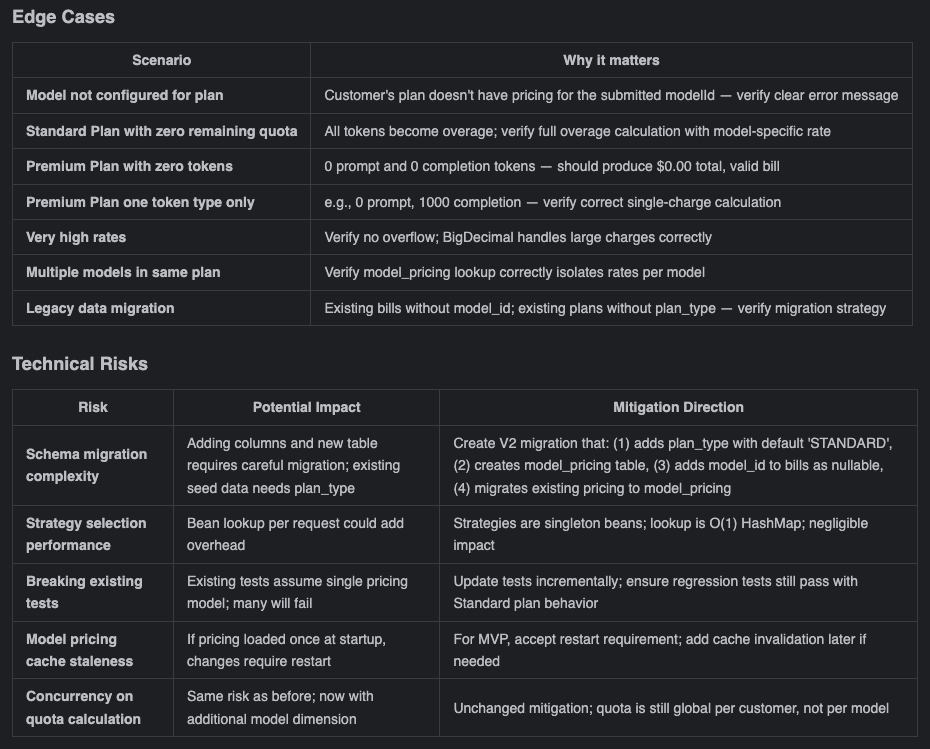
Edge cases and risks from the analysis document
To be transparent, at this stage we only possess a high-level conceptual alignment. While we can quickly envision the implementation for areas where we have prior experience, we cannot completely map out all the granular technical details for the unfamiliar parts right now.
However, that is perfectly fine. The overarching direction is aligned. We can proceed to the next step: observing how the AI “simulates” the concrete implementation details within our established framework and context. Once we have these tangible details, we can uncover deeper, hidden issues and make informed trade-offs based on the actual scenario—adopting the approaches where the benefits outweigh the drawbacks, and discarding the rest.
Decision: accept the analysis as-is and proceed.
Step 4: Generate structured prompt
How spdd-reasons-canvas works
This command reads business context (the output of
/spdd-analysis, or a direct requirements description)
and combines it with the current state of the codebase. It then
generates a design specification across all seven REASONS
dimensions — from “why are we doing this” to “what must we not
do.”
The output is an executable blueprint. The Operations section is precise down to method signatures, parameter types, and execution steps.
Instruction:
Generated artifact: the initial structured prompt.
By this point, we've already gone through high-level strategy during the analysis phase—so when reviewing the structured prompt, we're not starting from scratch. Instead, we're examining how the AI has translated our shared understanding into the REASONS Canvas structure: from strategy to abstraction to concrete details.
Think of it as a progression: the analysis phase gave us strategic clarity; now we're checking whether that clarity has been faithfully carried through into the architectural abstractions and implementation specifics. This is intent alignment at a deeper level—ensuring that before any code is generated, the AI has effectively “simulated” the entire solution within our defined framework. We get to review from a global perspective rather than getting lost in details from the start.
Focus the review on the areas highlighted in the abstraction-first skill. In this case, this foundational context is already embedded in the codebase and the previous structured prompt. Consequently, when generating the structured prompt for this iteration, the AI naturally factors in these architectural guidelines and OO principles. As a result, even though the generated content is highly complex, there are remarkably few major issues. We can opt to proceed with generating the code using this structured prompt first, and then conduct a deeper review to identify any potential code-level anomalies later.
So far, we have reached a strong consensus at the intent level, clarifying both the core problem and the resolution path. While there may be slight omissions in the details, this is not a concern; having aligned on the overall scope with the AI makes local optimizations highly controllable. Now, we transition into the code generation phase.
Step 5: Generate code
This step is more involved as we are generating the product code, tests, and our reviews have two alternative outcomes.
Generate product code
Once our structured prompt is locked in, use it to generate the product code.
How spdd-generate works
This command reads the REASONS Canvas and generates code task by task, following the order defined in Operations. It strictly adheres to the coding standards in Norms and the constraints in Safeguards — no improvisation, no features beyond what the spec defines.
The core principle: the prompt captures the intent, and the code is the implementation of that intent. Generated code must correspond one-to-one with this specification.
Instruction:
Generated artifact: code generated based on the structured prompt.
Thanks to the multiple rounds of logical deduction we did earlier using structured prompts, we approach the code review with a clear focus and set of priorities:
- Architecture: does the code strictly follow our expected 3-tier architecture?
- Business logic: does the Service layer implementation perfectly align with our initial intent?
- Scope of change: are the modifications strictly confined to the boundaries defined by the structured prompt, avoiding unrelated changes or scope creep?
In this specific case, thanks to the highly precise context, the generated code largely met our expectations, aside from a few potential “magic numbers.” We will optimize these out once the functional verification is complete.
The key takeaway here is: don't worry about making mistakes, and don't stress over not catching every single detail perfectly on the first try. As long as we keep iterating and advancing through the SPDD workflow, there are plenty of opportunities to course-correct. Minor code smells are fine for now—we verify the core functionality first, then circle back to optimize.
Feature verification
During feature validation, the SPDD workflow provides the
/spdd-api-test command to generate functional testing
scripts. 3
3: Since this is an optional command, if it is not available in
your local environment, you can generate it by running
openspdd generate spdd-api-test.
How spdd-api-test works
This command extracts API endpoint information from the code implementation or acceptance criteria and generates a cURL-based test script. The script includes a structured test-case table covering normal scenarios, boundary conditions, and error scenarios. When executed, it outputs expected-vs-actual comparison results.
Instruction:
Generated artifact: the API test script.
Guided by the defined rules in the command, the AI generates a script that formulates the required test scenarios using curl commands. We can review these AI-generated scenarios in the “TEST CASE OVERVIEW” section of the script.
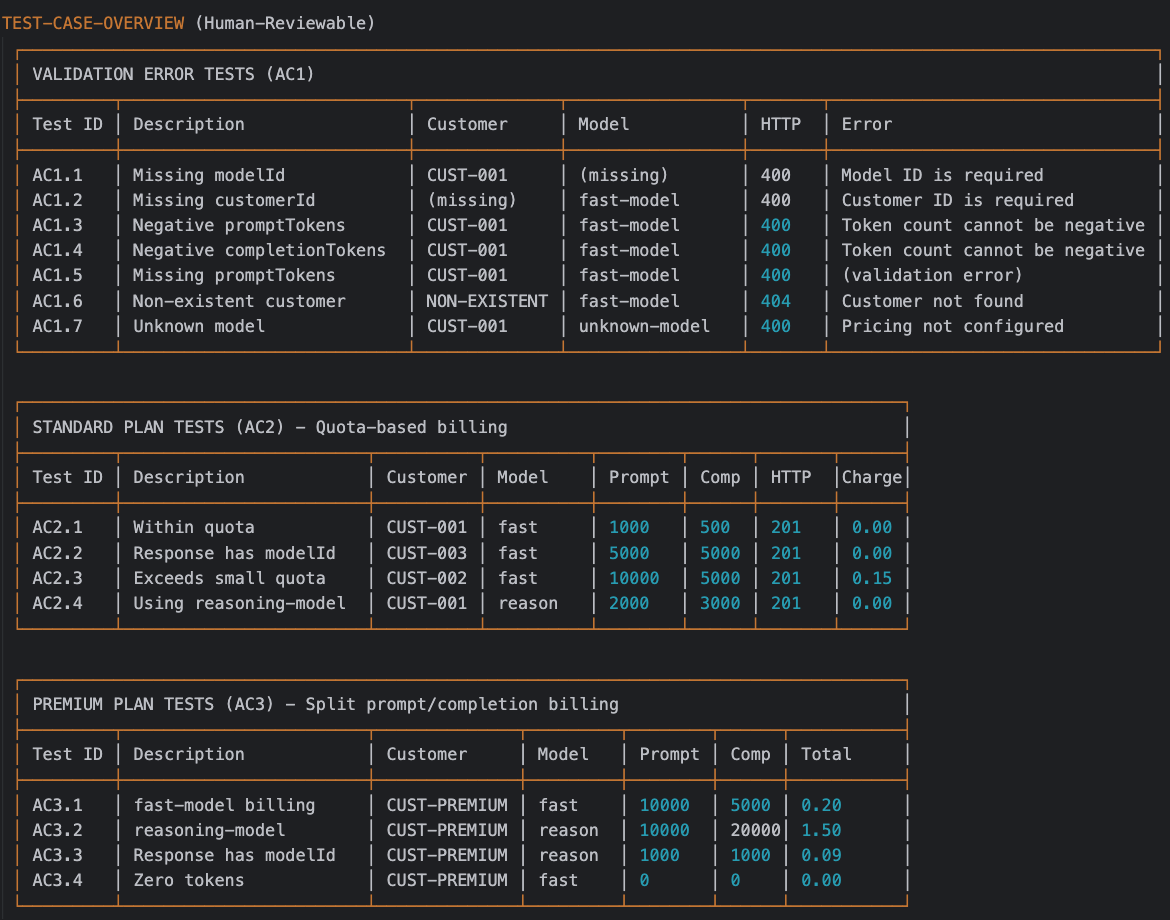
Generated API Test Script
Execution: once the script is generated, run it:
sh scripts/test-api.sh
Result: all functional tests passed successfully.
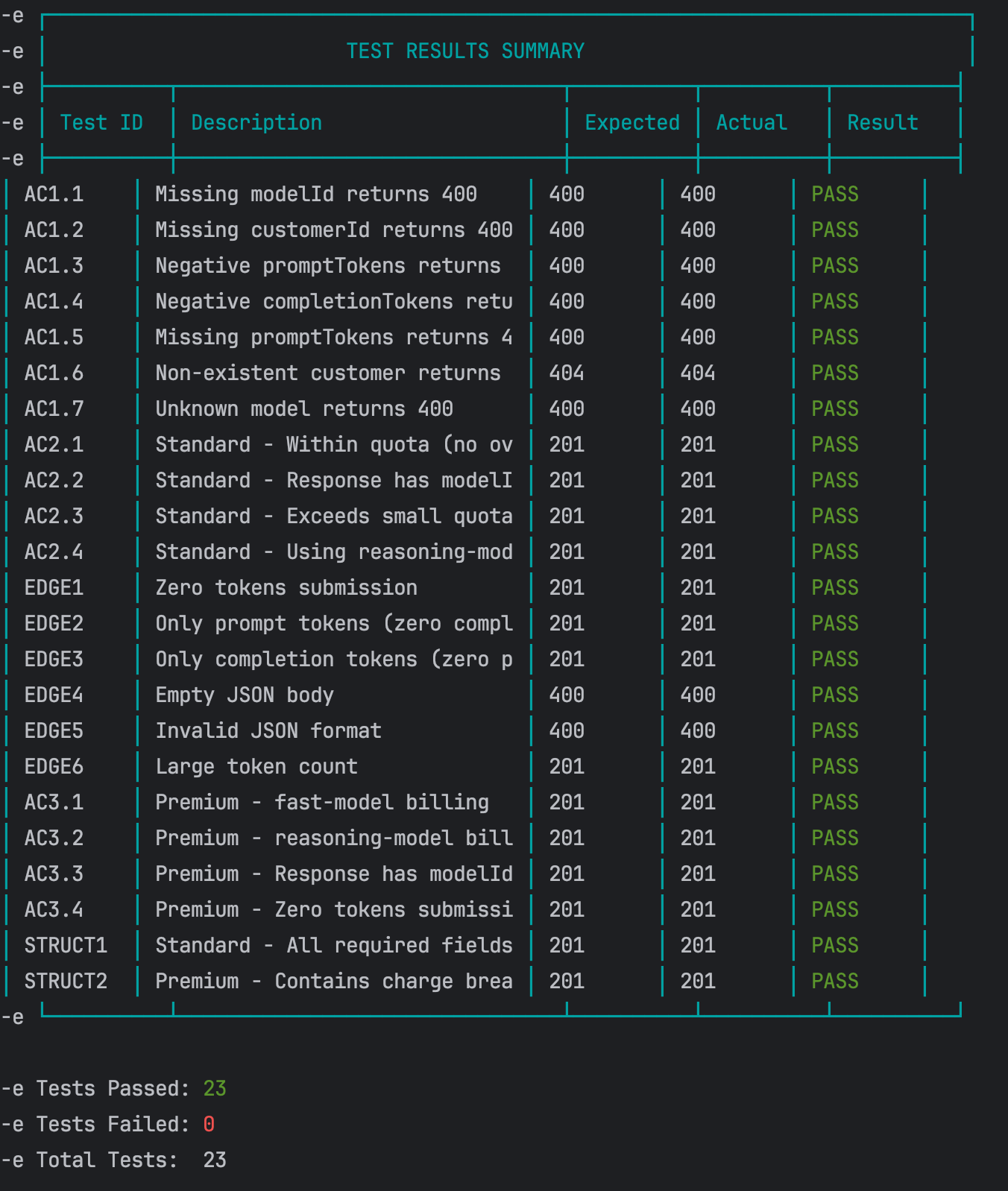
API Test Results
Code review & final adjustments
Thanks to the rigorous intent alignment in the first several steps, the heavy lifting is already done. At this stage, the remaining issues are usually minor logic discrepancies or surface-level code smells.
To maintain precision in our engineering practices, we categorize these final adjustments into two distinct types—based on whether they change the system's observable behavior—and handle them using different strategies within the SPDD workflow:

Two responses to code review changes
Logic corrections (behavior changes)
Strategy: update the prompt first, then generate code. For issues related to business rules or logic mismatches (which inherently change the observable behavior of the software), always update the structured prompt to lock in the correct intent before touching the code. This is an update or bug fix, not a refactoring.
For instance, when persisting modelId in the bill, we
currently allow this field to be nullable. The underlying reason is the
need to maintain backward compatibility with historical data, making
this workaround a reasonable architectural decision.
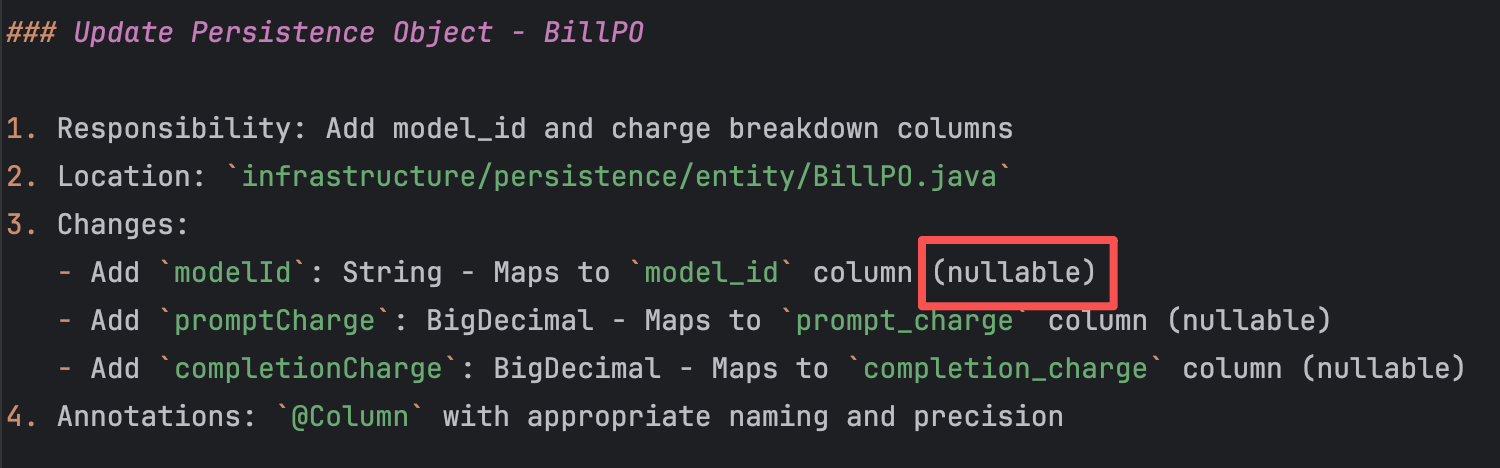
Prompt needs update
However, there is an alternative. If the business stakeholders can
confirm what the modelId value should be prior to this
change, we can unify the system's behavior and eliminate this potential
technical debt. Let's assume that, after confirming with the business,
the modelId for all historical bills should be set to
fast-model.
With this clear intent, we interact with the AI:
How spdd-prompt-update works
This command incrementally updates the existing Canvas. It modifies only the sections affected by the change and preserves everything else. Based on the type of change — new requirement, architectural adjustment, or constraint change — it automatically determines which REASONS dimensions need updating.
This differs from /spdd-sync: sync flows from
code to spec when code has changed; prompt-update flows from
requirements to spec when requirements have changed.
Instruction:
/spdd-prompt-update @GGQPA-001-202603191105-[Feat]-multi-plan-billing-model-aware-pricing.md
model_id is a required field, and its default value is fast-model. Based on this decision, update the corresponding parts of the structured prompt.
The AI updates the structured prompt based on this instruction.
Updated artifact: the updated structured prompt.
Once confirmed, use the /spdd-generate command to
update the corresponding code based on the newly updated structured
prompt:
The AI, guided by the rules defined within the
/spdd-generate command, comprehends the required changes
and performs targeted updates exclusively on the affected
codebase.
Updated artifact: the updated code.
It is important to note that we do not regenerate the entire codebase. We continue using the existing structured prompt and the AI handles targeted diffs:
- Identify the mismatch: notice that the behavior of
modelIdduring persistence is inconsistent with the new business requirement (it must be mandatory with a default). - Target the prompt snippet: copy the specific section from the structured prompt that defines the outdated logic.
- Update the prompt: paste the extracted snippet into the chat alongside the revised business rule, instructing the AI to update the structured prompt first.
- Generate targeted code updates: once the prompt reflects the new
truth, run
/spdd-generatepointing to the updated file. The AI automatically performs targeted diffs exclusively on the affected codebase, rather than regenerating everything from scratch.
Refactoring (clean code & style)
“A change made to the internal structure of software to make it easier to understand and cheaper to modify without changing its observable behavior.”
-- Martin Fowler
Strategy: refactor the code first, then sync back to the prompt. For structural or stylistic issues that do not change observable behavior, instruct the AI to refactor the code directly, and then use a sync command to update the prompt documentation.
For example, the AI-generated BillingServiceImpl class
contains some hardcoded magic numbers that need to be extracted into
meaningful constants.
private int calculateRemainingQuota(String customerId, PricingPlan plan) {
        if (plan.getMonthlyQuota() == null || plan.getMonthlyQuota() == 0) {
            return 0;
        }

        LocalDate currentDate = LocalDate.now(ZoneOffset.UTC);
        LocalDateTime monthStart = currentDate.withDayOfMonth(1).atStartOfDay();
        LocalDateTime monthEnd = currentDate.plusMonths(1).withDayOfMonth(1).atStartOfDay();

        Integer currentMonthUsage = billRepository.sumIncludedTokensUsedForMonth(customerId, monthStart, monthEnd);
        return plan.getMonthlyQuota() - currentMonthUsage;
    }
Instruction 1:
The AI executes the code refactoring based on this instruction
(remember the golden rule: always refactor in small, incremental
steps). If the output meets our expectations, we use the
/spdd-sync command to synchronize these newly updated
code details back to their corresponding locations within the
structured prompt.
Instruction 2:
How spdd-sync works
This command compares the current code against the Canvas specification, then synchronizes code-side changes (refactoring, bug fixes, new components) back into the Canvas.
The goal is to keep the Canvas as an accurate design document for the current code, rather than an outdated historical record.
The AI summarizes the changes based on the rules defined in the
/spdd-sync command. It then follows the structural
requirements of the REASONS Canvas to write the detailed code
description updates back into the corresponding sections of the
structured prompt.
Once both commands are executed, we can see all the prompt and code changes here.
For any deeper or hidden code smells, simply repeat these steps. The golden rule is to always keep the structured prompt synchronized with your latest codebase.
Regression test
Once all optimizing is complete, restart the service and run the API test script one more time to ensure no core functionality was broken during the cleanup.
Result: all passed.
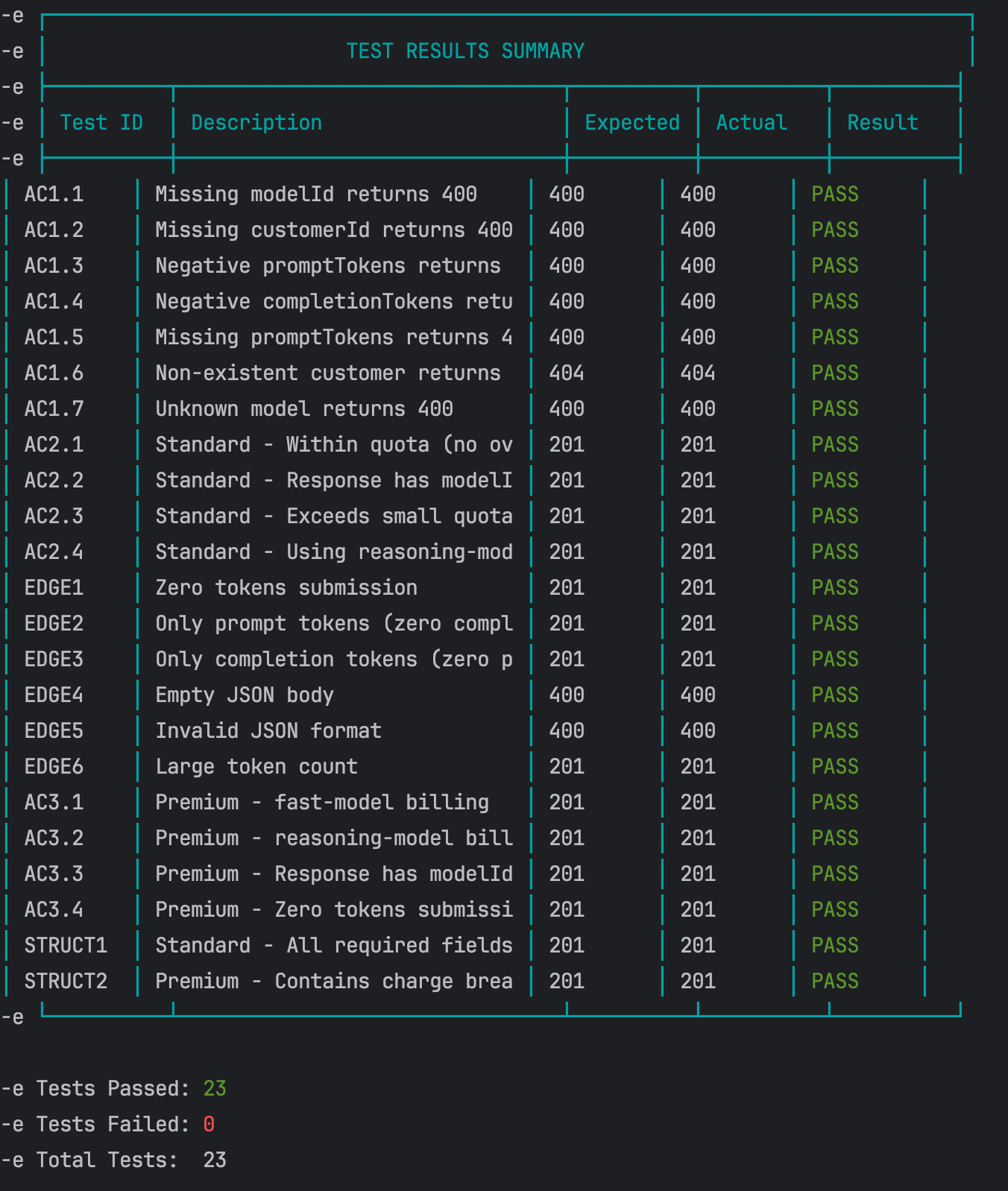
Regression Test Results
Step 6: generate unit tests
Functional testing alone is insufficient for robust validation; it acts primarily as an auxiliary check and is not factored into code coverage metrics. The final sign-off on core logic requires comprehensive unit tests. Currently, the SPDD workflow does not have dedicated testing commands finalized (these will be introduced in future iterations). As an interim solution, we utilize a template-driven approach to generate structured prompts for unit testing.
Generate the initial test prompt
We begin by combining the implementation details with our standardized testing template to generate a baseline test prompt.
Instruction:
Deduplicate and refine scenarios
After generating the initial structured test prompt, some of the proposed test scenarios were duplicates of what we already had. To address this, we continued the dialogue, instructing the AI to cross-reference the generated prompt with the existing test suite, identify the genuinely new scenarios, and remove any redundancies.
Instruction:
Updated artifact: the test structured prompt.
Generate the unit test code
Once the refined test scenarios are reviewed and confirmed, use the finalized test prompt to drive the actual code generation.
Instruction:
Result: all tests passed. Commit for tests.
What this example delivered
This marks the conclusion of a complete SPDD workflow. Through this standardized process, we successfully delivered the following key outcomes:
- A business logic implementation with exceptionally high intent alignment (~99%).
- Complete engineering transparency, including a clear understanding of the implementation path, technical decisions, and accepted trade-offs.
- A structured prompt asset tightly synchronized with the current codebase, laying a solid foundation for future iterations.
- Compounding human expertise, fostering a continuous accumulation of developer experience and mental models as we iterate collaboratively with the AI.
View the complete code diff for this enhancement on GitHub.
We've also prepared a bonus enhancement feature—Enterprise Plan Volume-Based Tiered Billing. If you're interested in getting some hands-on practice, we highly encourage you to tackle it using the SPDD workflow outlined above.
Three core skills
SPDD is a material change in how developers build software. In our work we have identified three core skills that they need in order to do their work effectively. These skills reflect where the value of developers is shifting in an AI-assisted world.
Abstraction first
design before you generate
Before generating any code, you need to be clear about what objects exist, how they collaborate, and where the boundaries are. Without that, AI often sprints on implementation details while the structure falls apart. Unclear responsibilities, duplicated logic, inconsistent interfaces, and the cost shows up later in review and rework.
Alignment
lock intent before you write code
Before implementation, you need to make “what we will do / what we won't do” explicit, and agree on the standards and hard constraints up front. Otherwise you end up with fast output and slow rework.
Iterative Review
turn output into a controlled loop
You want AI assistance to behave like an engineering process, not a one-shot draft. Without a disciplined review-and-iterate loop, teams either keep forcing the model to patch things until the solution drifts, or they restart repeatedly and lose control of cost and time.
Where SPDD fits
Fitness assessment
SPDD is an engineering investment. The table below rates how well it pays off by scenario, from highly recommended (5 stars) to not suitable (1 star).
| Rating | Scenario | Notes |
|---|---|---|
| ★★★★★ | Scaled, standardized delivery | High-repeat business logic that needs long-term maintainability (e.g., building many similar APIs, automating core business workflows). |
| ★★★★★ | High compliance and hard constraints | Environments where you must follow regulations, security standards, or strict architectural rules (e.g., financial core systems, multi-channel / multi-client deployments). |
| ★★★★☆ | Team collaboration and auditability | Multi-person delivery where changes must be fully traceable and reviewable end-to-end. |
| ★★★★☆ | Cross-cutting consistency work | Complex refactors where logic must stay tightly synchronized across multiple microservices or different languages. |
| ★★☆☆☆ | Firefighting hotfixes | “Stop the bleeding” production fixes where speed matters more than architectural discipline. |
| ★★☆☆☆ | Exploratory spikes | When the goal is to validate an idea quickly rather than ship production-quality software, SPDD's governance overhead won't pay back. |
| ★★☆☆☆ | One-off scripts | Disposable data cleanup or temporary scripts where SPDD's upfront cost is too high relative to the value. |
| ★☆☆☆☆ | Context black holes | When the domain is poorly defined and business rules are unclear, you can't set meaningful boundaries for the model. |
| ★☆☆☆☆ | Pure creative / visual work | Tasks driven by taste and aesthetics rather than logic (e.g., UI visual exploration, marketing copy). |
Trade-offs to consider
Return on investment
| Benefit | Impact | Speed | What you get |
|---|---|---|---|
| Determinism | High | Immediate | Encode logic in a precise spec, which significantly reduces hallucination and “creative” interpretation. |
| Traceability | High | Immediate | Every meaningful change can be traced back to the structured prompt, closing the audit loop. |
| Faster reviews | High | Short-term | Code “arrives” closer to team standards, so reviews focus on logic and design, not formatting and cleanup. |
| Explainability | Medium-High | Gradual | Intent and behavior are visible at the natural-language level, lowering the cognitive load for understanding and maintenance. |
| Safer evolution | High | Long-term | Well-defined boundaries and stepwise implementation make targeted changes lower-risk and easier to iterate. |
Upfront investment
| Area | Barrier | Nature | What it takes |
|---|---|---|---|
| Mindset shift | High | Ongoing training | Teams have to adapt to “design first” rather than “code first.” |
| Senior expertise up front | Medium-High | Per-feature | Engineers who can translate business rules into clean abstractions and design constraints. |
| Automation tooling | Medium | Infrastructure setup | Without automation, SPDD hits a throughput ceiling and struggles to keep prompts consistent. openspdd runs the workflow in this article—from analysis and structured REASONS prompts through code and optional test support—as repeatable CLI steps, so artifacts stay versioned and reviewable instead of trapped in chat. Larger organizations may still layer a knowledge platform on top to manage and reuse assets at scale. |
Closing
By using the REASONS Canvas, clarifying intent, establishing the right abstractions, breaking work into concrete tasks, and locking in boundaries, we give AI a well-defined space to operate. Within that space, SPDD may not be the shortest path to “generate code quickly,” but it is one of the most reliable ways to ship the right change with confidence.
It's also fair to say that SPDD shines most in logic-heavy domains. In areas driven by aesthetic judgment, frontend styling, for example, we're still exploring engineering patterns that can be as stable as purely logical construction.
The framework in this article is only the “moves.” The real advantage comes from sharpening the meta-skills behind it: abstraction and modelling, systematic analysis, and a deep understanding of the business as a whole. Those are the human strengths that ultimately determine how much value we can get from AI.
In the AI era, software development isn't a contest of model IQ. It's a contest of engineer cognitive bandwidth – how clearly we can think, frame problems, and make decisions.
We'll close with a quote that captures the spirit of SPDD:
“In science, if you know what you are doing, you shouldn't be doing it. In engineering, if you don't know what you are doing, you shouldn't be doing it.”
Acknowledgements
We'd like to express our sincere thanks to Martin Fowler. Despite a busy schedule, he invested deeply in this article — from sharpening the narrative structure and clarifying key concepts, to elevating the visual storytelling with improved and new diagrams. His keen eye for detail and commitment to precision profoundly shaped the final result.
We're also deeply grateful to Eric (Ke) Zhou, Wei Sun, Sara Michelazzo, Rebecca Parsons, Matteo Vaccari, May (Ping) Xu, Zhi Wang, Feng Chen and Da Cheng for their thoughtful critique and insights. Your input helped us clarify several key concepts that underpin the methodology.
We also want to recognize early practitioners: Jie Wang, Jian Gao, Yixuan Feng, Siyuan Li, Yixuan Li, Biao Tian, Wei Cheng, Qi Huang, and Yulong Li. Thank you for validating SPDD in real projects, and for your patience as the approach matured. Your frontline feedback has been foundational to making SPDD practical and robust.
Finally, in the spirit of practicing what we preach, this article itself was shaped with the assistance of large language models — Claude 4.5 Sonnet, Claude 4.6 Opus, Gemini 3.1 Pro, and ChatGPT 5.4. We relied on them for prose refinement, structural review, synthesizing suggestions, and as thought partners for continuous learning throughout the writing process. Their contributions are a fitting testament to the very approach this article describes.
Some Questions Answered
After publication of this article, we received many questions. Here are some answers.
With rules, workflow definitions, and execution hooks already governing AI output, what gap does SPDD actually fill — tighter coupling between prompt and code, versioning that prevents drift over time, or both?
Both, and they reinforce each other. Global rules and hooks are a valuable high-level safety net, but in day-to-day engineering they sit at a level of abstraction that leaves the actual generation step opaque. Here is how SPDD fills the gaps that high-level guardrails alone do not close:
- Finer-grained control over intent. High-level rules describe broad strategy and boundaries, but they leave the generated code as a black box. SPDD makes the problem-solving steps explicit through the REASONS Canvas — intent, design, execution, governance — so reviewers can reason about the plan before the code, and humans stay in the loop where it matters.
- Reusable intent assets. Ad hoc prompts are single-use. SPDD turns structured prompts into version-controlled artifacts that travel with the code, capturing business intent, design decisions, and constraints. That is what closes the loop between prompt and code over time and prevents the slow drift that happens when only the code is maintained.
- A framework for human learning. If we let the model produce code unsupervised, our own modelling and abstraction skills weaken over time. SPDD forces developers to reason about the problem alongside the tool, so domain knowledge and design judgement compound across iterations rather than being lost after each chat.
How does this differ from traditional instruction sets placed within projects/solutions using progressive disclosure?
The core difference is that SPDD treats the structured prompt as a maintained, version-controlled file:
- Fixed structure instead of free-text rules. Rather than feeding the model open-ended instructions, we use the REASONS Canvas — a fixed seven-part template covering intent, design, execution, and governance. The AI must plan inside that shape, which makes the plan readable and reviewable in a consistent way across the team.
- Intent before code. The commands clarify requirements, domain, and approach before generating anything — moving uncertainty to the left. Disagreements get resolved at the prompt level, where they are cheap to fix, instead of surfacing later in the code.
- Task breakdown via Operations. The canvas's
O — Operationsdimension decomposes the abstract strategy into concrete, testable implementation steps — down to method signatures and execution order. Reviewers check these steps before any code is written, so generation becomes a faithful translation of an already-agreed plan. - Two-way sync, not handoff. Traditional in-project
instructions and design docs go stale the moment the code
moves on. In SPDD the prompt and the code are tied together:
when business rules change,
/spdd-prompt-updateflows requirements → prompt → code; when the code is refactored,/spdd-syncflows code → prompt. The spec stays an accurate record of the current system rather than a historical snapshot.
Humans build the “why” behind decisions through discussions and accumulated context, not just the final code. Does SPDD close that loop with automated learning, or is the “why” still carried by humans?
It depends on what we mean by “closing the loop.” If the
question is whether SPDD has a closed AI learning loop —
where every chat silently teaches the model and the system
gets smarter on its own — then honestly, not yet, and we are
deliberate about that. openspdd runs as a
semi-automated, human-led framework, and humans remain the
gatekeepers for all core decisions.
But the “why” itself does not stay locked inside human heads or scattered chat logs. It is captured in the structured prompt as a first-class artifact:
- The Canvas encodes the rationale. R (Requirements with DoD), A (Approach), and the Step 3 analysis context explicitly record what we are solving, why, and which trade-offs we accepted — not just what to build.
- Version control makes it durable. Because prompts are committed alongside the code, the “why” travels with the system across people and time, instead of being lost when a chat window closes or a developer leaves the team.
- Two-way sync keeps it current.
/spdd-prompt-updateflows requirements → prompt → code when intent changes;/spdd-syncflows code → prompt when implementation changes. The artifact stays an accurate record of the current system, not a historical snapshot. - Each iteration starts from accumulated assets. The next enhancement begins with the existing Canvas as context, so domain knowledge and design decisions compound rather than getting rediscovered each cycle.
So the loop is closed by the workflow and the artifact, not by an autonomous learning mechanism. Reviewers shift from “spot the bug” to “check the intent” because the intent is now somewhere they can inspect. That is a human-led design by choice, and we think it is the right one for now — until automated verification at the asset layer matures enough to take on more of the load.
If two developers writing the same Canvas can produce different specs — and there is no formal definition of “good” — doesn't SPDD just push the variance problem up a layer rather than solve it?
Honestly, that's a fair characterization of where we are today. The Canvas narrows the band of variance compared with free-form prompting, but it does not eliminate it. Two developers writing against the same requirement can still produce different Canvases, and the same developer can produce a thinner one on a different day. We don't yet have a crystallized, objective standard for what a “good” Canvas looks like.
What the framework relies on right now is a set of baseline
criteria — structure, granularity, level of abstraction, and
task breakdown — codified into the openspdd
commands. Each command encodes a thinking strategy that pulls
the output toward a consistent shape, which raises the floor
for less experienced practitioners and gives reviewers a fixed
thing to react to. That is a meaningful reduction in variance,
but it is not the same as an external, automated check.
Closing that remaining gap is where governance needs to go next: automated verification at the asset layer (analysis, Canvas, prompt artifacts) so the framework itself catches the cases where a Canvas is structurally complete but substantively under-specified. Until that exists, the honest answer is that human judgement is still load-bearing.
How does SPDD hold up as you scale it across multi-project, multi-discipline, multi-domain work — and where does the real ceiling sit: in the AI's capability, or in how cleanly the problem itself can be bounded?
The limit is mostly on the problem side, not the model side. Even with a stronger model or a better learning loop, we would not recommend handing a massive, multi-project, cross-domain scope to the AI in one shot. What matters more is how clearly the problem is bounded and how much prior context the team has accumulated; raw model capability is rarely the bottleneck. Three reasons:
- Decomposition is required. Large or cross-domain scope is better broken into smaller, self-contained units that can be modelled accurately one at a time. Without this discipline, even a strong model loses coherence as the scope widens.
- Unclear boundaries cap the success rate. In “context black holes” — domains where business rules are unclear and boundaries are weak — SPDD's success rate drops because the model has nothing meaningful to constrain it. A more powerful AI does not fix this; it just fails more confidently.
- Decision assets help over time. End-to-end portfolio-scale work is not something we would hand off autonomously today. That changes once enough “decision assets” — historical context, architectural choices, normative patterns — have accumulated to raise the success rate to an acceptable level. Until then, the human-led, unit-by-unit approach is the default.
Is SPDD model-agnostic? Does accumulated prompting behave equivalently across Claude, GPT, and Gemini, or could a model change between iterations — switching providers, going local-offline vs remote-online, or a provider update altering reasoning behavior — introduce prompt drift or code divergence? Is the real artifact prompt-as-spec, or prompt + model configuration?
SPDD is intended to be model-agnostic, and we have applied it across model generations since the Claude 3.5 Sonnet era. The workflow does not depend on any single model. That said, raw capability still matters: stronger reasoning models simply produce better canvases.
From hands-on experience, for the heavy-lifting analysis and REASONS Canvas generation steps, Claude (especially Opus) tends to lead, followed by GPT Codex and Gemini 3.x Pro. Once intent is locked into a structured prompt, however, the next phase is largely instruction-following, so swapping to a slightly less capable model carries a manageable risk of intent drift. Viewed this way, the artifact is the spec; the model is the executor of that spec.
On local-offline vs remote-online: today we do not recommend local-offline LLMs for SPDD. The small models that fit on local hardware lack the capability needed for the analysis and canvas-generation steps, and deploying capable large models locally is rarely cost-effective.
So SPDD does not guarantee absolute determinism, and we do not claim it does. What it does is keep the randomness of the LLM's non-determinism within controllable bounds. Whether you treat the artifact as prompt-as-spec or prompt + model configuration is a strategic call tied to your cost, compute, and compliance constraints — and one teams should make consciously.
As LLM capabilities have advanced, has the SPDD method itself changed — or only how practical it is to apply?
The method hasn't fundamentally changed. The core loop is still the same: anchor everything on the structured prompt, and use it to progressively clarify intent.
What has changed is how much of that manual effort we can
hand off to repeatable tooling on top of the LLM. As the
models got better at following structured prompts and
reasoning over richer context, we distilled each step of the
workflow into a reusable thinking strategy — commands like
/spdd-analysis,
/spdd-reasons-canvas, /spdd-generate,
and /spdd-sync. Three things came out of that:
- From template-driven to strategy-driven. Earlier on, SPDD relied heavily on solution templates: without a well-summarized template up front, output quality dropped, which made starting on a new domain difficult. Now each command encodes the thinking strategy itself, so even with no template the LLM can follow the strategy to produce a reasonable first cut. We refine from there, and once enough cases have gone through the same strategy, a template emerges as a byproduct — so the asset is built up by use rather than required before any work can start.
- Higher automation. Steps that used to be driven manually with ad hoc prompts are now invoked as commands, so the workflow runs with far less hand-holding.
- More stable outputs. Because each command encodes the same thinking strategy every time, the artifacts it produces — the analysis, the REASONS Canvas, the generated code — are far more consistent run to run, and therefore easier to govern and review.
As the human “lead”, how do you judge when additional prompt engineering is needed over the same portfolio scope?
I rely on three concrete triggers, and they map directly to the review steps in the SPDD workflow:
- Behavioral mismatches. During functional testing
(typically with
/spdd-api-test), I focus on system behavior rather than implementation detail. If the output deviates from the defined acceptance criteria, that's a signal the prompt didn't capture the intent precisely enough — a classic logic-correction case where we update the prompt first, then update the code. - Overcomplicated logic. When reviewing critical code, if the AI has engineered a solution that is more elaborate than the problem warrants, the prompt's Approach or Operations section is usually under-specified. Tightening those constraints typically simplifies the next generation.
- Instruction failures. When the AI fails to follow explicit instructions or violates a Norm or Safeguard from the canvas, I treat it as a signal that the constraint needs to be made more prominent or unambiguous in the prompt itself, rather than fighting the same battle again in chat.
Why does SPDD's workflow have six steps instead of the simpler plan-then-code pattern? Couldn't intent just be confirmed once, in a single review after the plan is generated?
The short answer is cognitive load. Intent confirmation has to be distributed across the workflow, because compressing it into a single review after plan generation puts too much in front of the reviewer at once. In practice, people can't sustain that level of attention — they skim, defer, or approve by default — and intent drift becomes inevitable even when everything looks correct on paper.
The six steps exist so each checkpoint stays small enough to actually engage with:
- Step 1 shapes the raw idea into a user story (optionally with AI assistance), and Step 2 is where the human reviews and clarifies what that story actually means in business terms — anchoring on the right problem before any design work begins.
- Step 3 confirms the domain understanding, risks, and strategic direction — the “why” and “what”.
- Step 4 confirms the structured prompt — the design and operations — only after the analysis is agreed.
- Step 5 confirms behavior and code only after intent is locked.
- Step 6 generates unit tests last, once the implementation is stable.
By the time reviewers are looking at code, the requirements, domain model, and design have already been signed off, so attention can go to the decisions that matter at that stage. The point isn't more steps for their own sake; it's narrower decisions per step, so humans can stay in the loop.
SPDD runs API tests before code review but unit tests after — almost the inverse of TDD. Why is that sequence?
This sequencing was deliberate. Classic TDD uses tests to clarify behavior, protect against regressions, and shape design through fast feedback. SPDD still wants all three outcomes — it just distributes them differently across the workflow:
- API tests come first because generated code is
cheap. There is little value in deeply reviewing code
that may not even satisfy the intended business behavior.
/spdd-api-testvalidates the “what” at the system boundary quickly, so we know we are reviewing something that actually works before investing the human review effort. - Code review then focuses on what only humans can judge. Once the API tests pass, review concentrates on logic, architecture, trade-offs, and non-functional concerns — not on whether the basic behavior is right.
- Unit tests come last as a regression safety net. By the time we reach unit tests, intent has already been made explicit through the structured prompt, and the implementation has been stabilized through API validation and review. Generating unit tests at this point avoids rewriting them after major review-driven changes.
So tests are not less important in SPDD. The change is that intent is made explicit earlier — through the structured prompt — and tests can be applied at the stages where they create the most leverage.
If hotfixes are rated a poor fit for SPDD, doesn't the highest-signal feedback from production — the bugs, edge cases, and failure modes that triggered the fix — permanently bypass the spec and never make it back into the methodology?
It would, if the workflow stopped at the fix. The 1-star rating in the fitness table is about the upfront fit during the incident itself: during a live production incident, system recovery has to come first, and stopping to write a Canvas is the wrong call. But governance is not skipped — it is deferred by one step. In practice we split hotfixes into two scenarios:
- Scenario A — context exists. If the bug falls inside an area already covered by a structured prompt, we use the AI to analyze the failure, identify the root cause, and then apply the standard SPDD loop in compressed form: update the prompt first, then update the code. This keeps the spec and the implementation in lockstep, and the fix becomes a permanent part of the governed asset.
- Scenario B — legacy or no prior context. For urgent fixes in code that was never brought under SPDD, the pragmatic move is to let the AI analyze the logs and fix the issue directly. The closing step is a deliberate post-mortem: synthesize the fix, the failure mode, and the relevant context into newly documented assets. That is where the governance loop closes for legacy code, and it is also how SPDD coverage organically grows over a codebase.
The key point is that production signal does feed back — but it requires an explicit, human-led documentation step rather than happening automatically. Skipping that step is what creates the spec/code delta the question describes; treating it as part of the workflow is what prevents it.
Have you considered having an agent do the prompt/spec review itself — not a human reviewing the Canvas, but an agent that reads the REASONS Canvas alongside the code diff and verifies alignment?
Yes — that is basically what the
/spdd-code-review command already does. It
reads the REASONS Canvas and the code diff together and flags
where the code drifts from the stated intent, so you can hand
the alignment check off to the command whenever you want.
The trade-off is what you give up by doing that. The command can check alignment, but there are two things humans bring to review that an agent cannot replace:
- Catching intent drift. An agent can check whether the code matches the Canvas, but only a human can tell whether the Canvas itself still matches the real business intent. Without that check, a fully agent-driven review can look correct on its own terms but still miss the real goal.
- Letting humans learn. Review is also where humans learn from the AI's choices — patterns, trade-offs, options they had not thought of. Cutting humans out speeds things up, but it blocks the long-term skill growth that SPDD is designed to protect.
So the command is there when you want to use it, but it is built to handle the mechanical part of review, not to take it over. For now, humans stay in the loop by design. Once enough decision rules build up to give us real confidence, we may shift more of the review to the agent step by step — but the part where humans learn from the AI is something we plan to keep.
What's next for SPDD — and how will the roadmap reduce its dependence on individual expertise?
Four directions are shaping how the practice will evolve, and they all pull the same way: less reliance on personal craftsmanship, more repeatable organization-level capability.
- More recurring workflows captured as commands.
The pattern that started with
/spdd-analysis,/spdd-reasons-canvas, and/spdd-generateis far from finished. As we encounter recurring patterns in real projects, we keep extracting them into new commands, so each successful workflow becomes reusable rather than knowledge held by individuals. - Automated verification at the asset layer. We are exploring automated verification not at the code level but on the SPDD assets themselves — the analysis, the REASONS Canvas, and the prompt artifacts. The aim is to layer automated checks and, over time, some automated decision-making on top of these intent-layer assets, so the framework can catch gaps, inconsistencies, and routine calls that today depend entirely on human review.
- Progressively raising the automation ratio. SPDD itself is already a harness — just a semi-automated one, with humans in the loop on the decisions that matter. The direction is to raise the automation ratio inside that harness step by step, paced by what the AI can reliably handle in practice, so more of the workflow runs without hand-holding only as the model proves dependable on each kind of task.
- A memory mechanism for “decision memory”. The goal is to let historical decisions — past canvases, trade-offs, and accepted patterns — act as persistent context, so the agent can retrieve the right prior reasoning in a given situation rather than rediscovering it each time. Specifics will be shaped by practical feedback.
Together, these directions move SPDD from a method that rewards skilled practitioners to a system where the framework itself carries more of the weight.
All of this reflects our current understanding and experience, and is likely to be adjusted as we keep learning and practising.
Footnotes
1: In a one-way pipeline, requirements produce code and the process ends; any later adjustment happens in code alone and the original intent drifts out of date. In SPDD the loop closes on two scales. Within an iteration, feedback flows back: logic corrections update the prompt before the code; refactoring syncs from code back to the prompt — so neither side silently diverges. Across iterations, the accumulated prompt assets — domain models, design decisions, norms, etc. — become the starting context for the next enhancement, so each cycle builds on a governed baseline rather than starting from scratch.
2: Since this is an optional command, if it is not available in your local environment,
you can generate it by running openspdd generate spdd-story.
3: Since this is an optional command, if it is not available in
your local environment, you can generate it by running
openspdd generate spdd-api-test.
Significant Revisions
04 May 2026: Added Q & A
28 April 2026: initial publication